
A photo essay · Escuela Argelia Laya, Micarache
The teachers at the end of the road.
Twenty-two children, three educators, and a school that works with what it has.
Estefany at the blackboard, mid-lesson. Photo by Estefany, one of the school's three teachers.
Where the road ends
Micarache, near where the Gavidia road ends.
Past the last houses of Aldea Gavidia, in the high páramo of Mérida, the road climbs and narrows and eventually gives out into a footpath into the mountains. Micarache sits near that point — ridgelines on every side, the air thin, the nearest town a long walk down. Escuela Argelia Laya is the school there: one building, a yard, and a gate, and it is the only school the families of Micarache have.
This is a civic story, not a political one. Nobody asked for blame to be assigned and we're not assigning any. A school at the end of a mountain road needs help to do its work properly — that's simply true, and it's ours to help with if we can.
The building
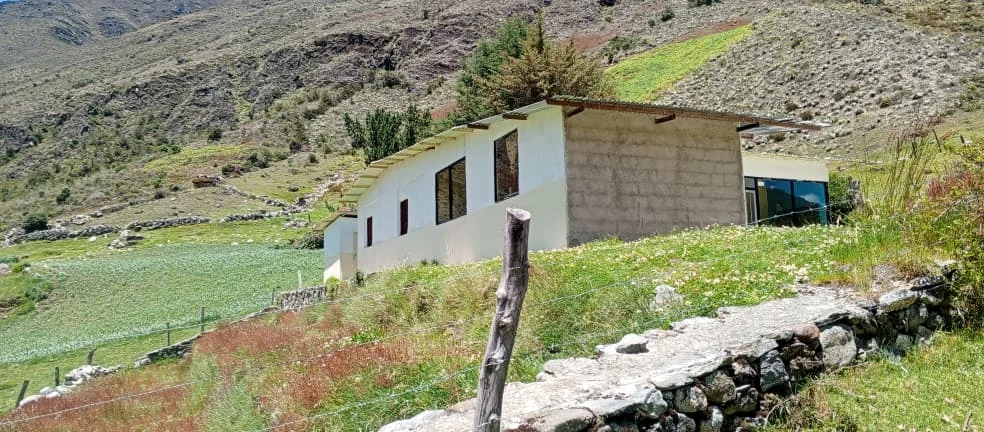
A low concrete block, set into the páramo.
Seen from the field below, the school is small against the land around it — one storey, a few doors, a roofline that barely breaks the horizon. From the open ground beyond the grounds, it reads as just another building folded into the high valley, easy to miss if you didn't know to look for it.
The grounds
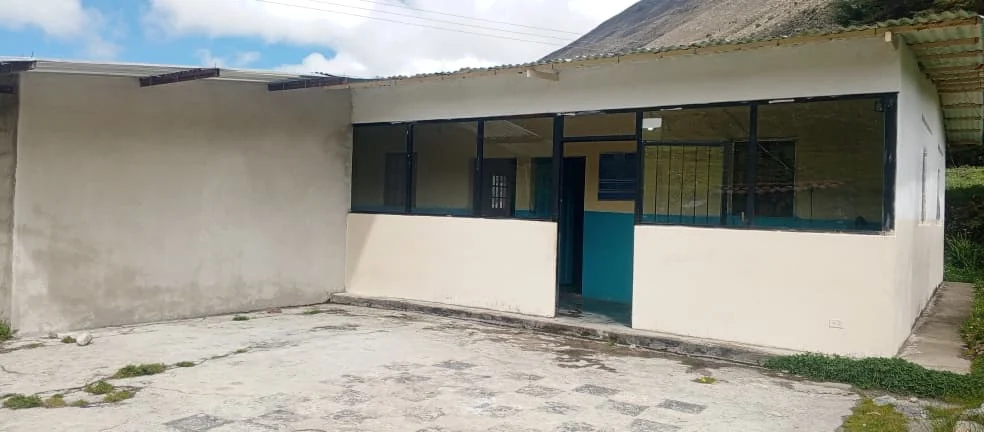
The schoolhouse, mountains behind.
Up close, the frontage is plain and well kept — painted walls, a swept walkway, doors set in a neat row. The mountains behind it do most of the talking. There's no fence line running far in any direction; the school and the open páramo share an edge.
The wider view
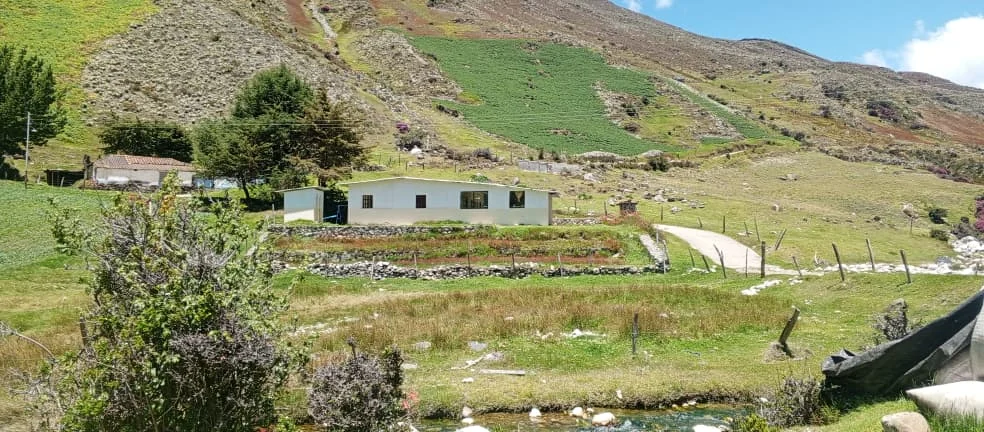
The grounds, in the open páramo.
Zoom out further and the scale of the place becomes clear: a small cluster of buildings and a stone-walled yard, set down in a landscape that dwarfs it on every side.
Inside
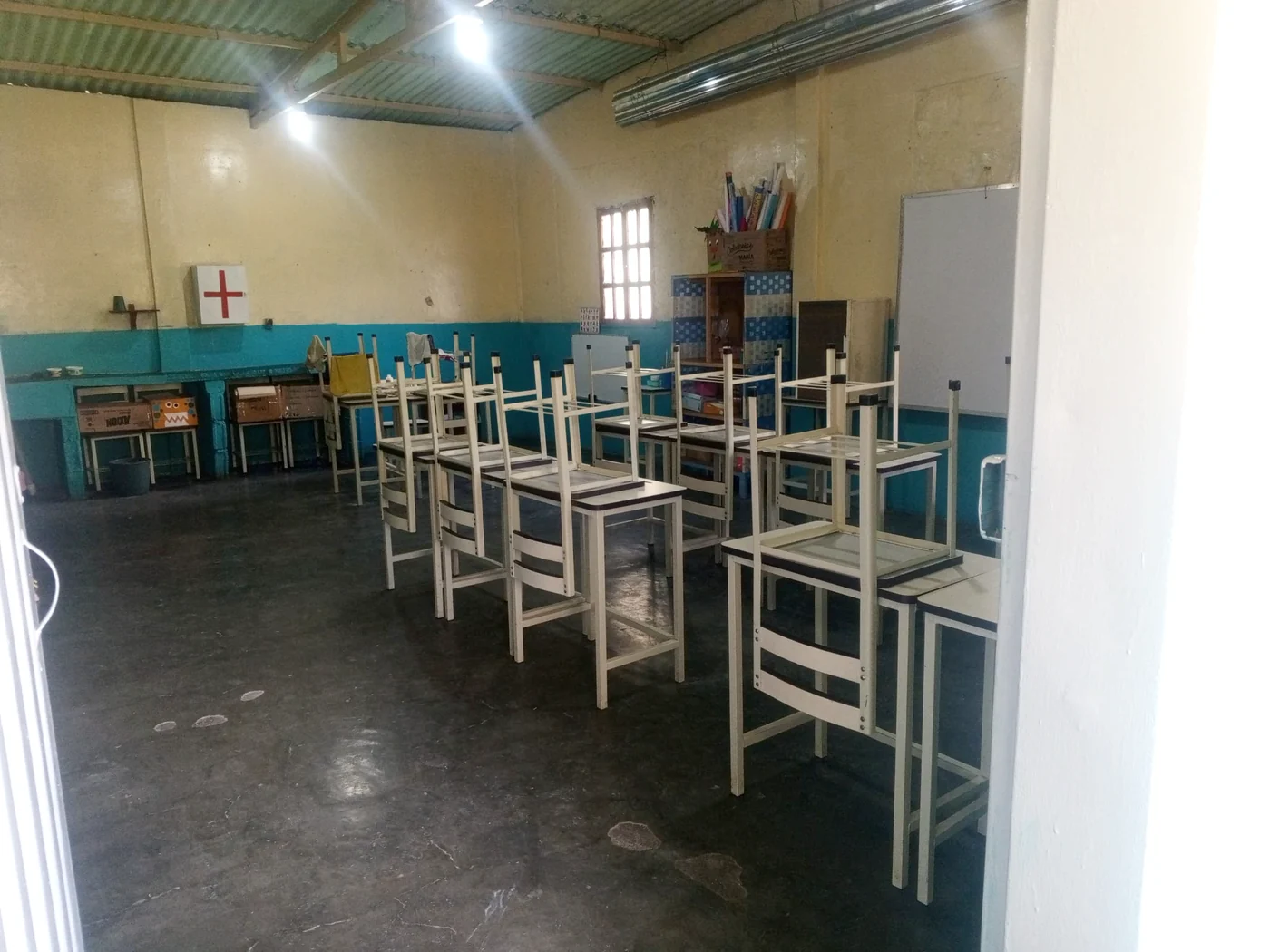
A bare room, a blackboard, handmade desks.
Handmade wooden desks, a bare concrete floor, a blackboard at the front. This is the classroom when it's empty, between lessons — stacked and quiet, waiting for the children to come back in.
Who keeps it running
Three educators. Twenty-two children. Every grade, every subject.
Estefany, a second teacher, and the school's director are the entire staff of Escuela Argelia Laya. Between them they teach preschool through primary — 22 children in one building — and there is no dedicated physical-education teacher, no recreation teacher, no specialist for anything. Whatever the children need taught, one of the three teaches it.
-
01
Estefany
One of the school's three teachers. You'll see her in these photos at the blackboard, in front of the class. She documented almost everything on this page herself, on her phone, between lessons.
-
02
A second teacher
Shares the teaching load across both classrooms and every grade level, from the youngest preschoolers to the oldest primary students.
-
03
The school's director
Runs the school alongside the two teachers — administration, upkeep, and a share of the teaching itself, all at once.
The visit
The afternoon they sat down to ask.
In late September, the school's director sat down with Indira — part of the team here — to go through what Escuela Argelia Laya needs, line by line.
Indira came away without words. What caught in her throat wasn't a long list of demands — it was how little the school asked for, and how honestly. Their first letter barely reflected how much they actually go without. Too honest, she said; she had to sit with the director and gently get more of it written down.
“No tengo palabras. Solo quiero llorar.”
I have no words. I just want to cry. — Muy nobles, muy fuertes — so humble, so strong.
By the end of the afternoon, Indira wanted to hand over the stove from her own kitchen, just so the children could eat again in the meantime. That is what this school does to the people who finally sit down and listen.
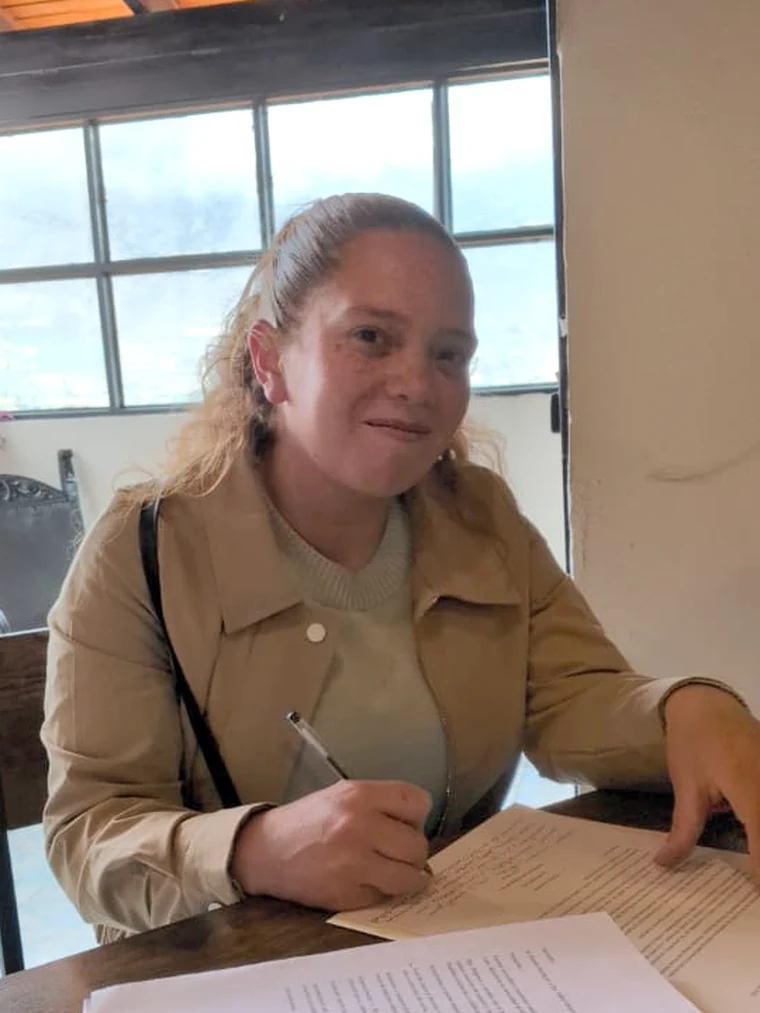
“Trabajamos con lo que tenemos.”
We work with what we have.
It's the sentence that explains everything else on this page. Not a complaint — a description of how the school runs, day to day, and what three educators have turned it into: real lessons, built from whatever is already in the room.
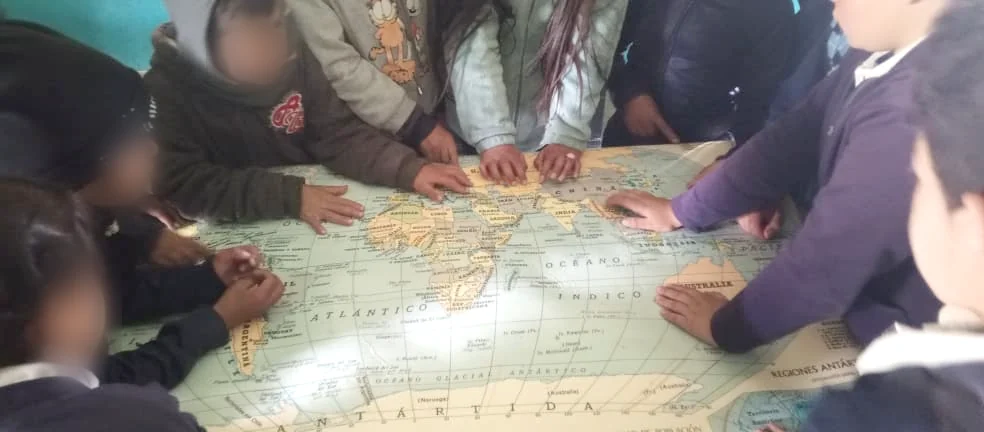
“Contamos con un solo mapamundi, ya que no tenemos otro recurso para ver los otros países y sus límites.”
We have a single world map; it's our only way to show the children the countries and their borders.
What they've built anyway
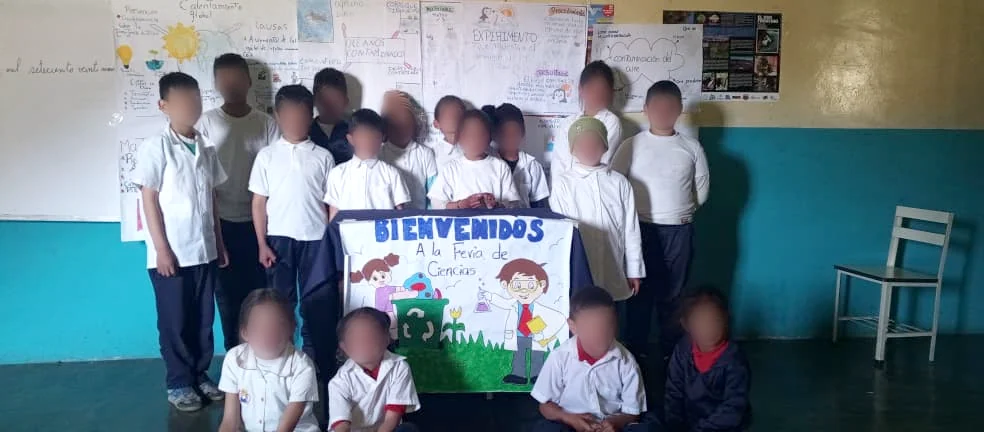
A whole class, around a welcome banner they made.
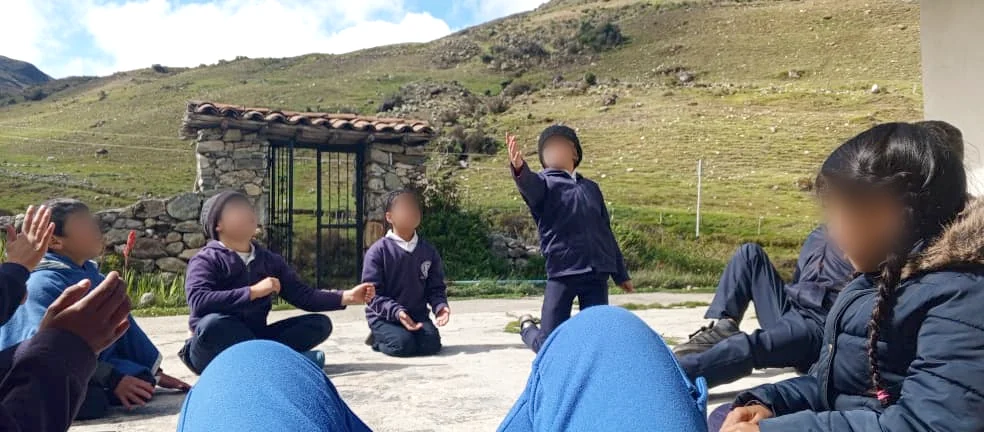
A single map doesn't stop a class from putting on a science fair. The children gather here beside a hand-lettered Bienvenidos banner they made for it — proof that resourcefulness, at this school, isn't a fallback. It's the normal way of doing things.
“Solo contamos con un ajedrez, 3 pelotas que están viejitas y 10 cuerdas de saltar.”
We have only one chess set, three old balls, and ten jump ropes.
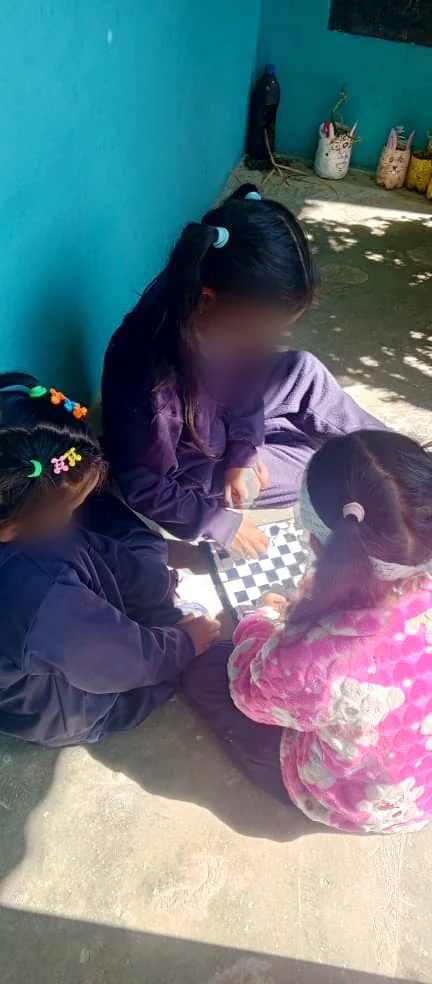
“Realizamos juegos dinámicos con las cosas que contamos en la mano.”
We make active games from whatever is at hand.
“Como puede ver, ese patio que contamos, no tenemos cancha deportiva.”
As you can see, the yard we have — there's no sports court.
Where PE happens
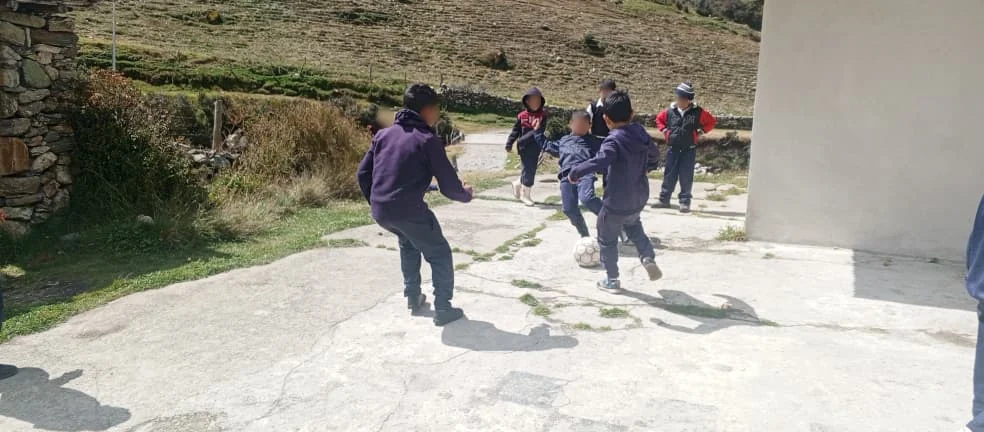
“Educación física nos toca dar en una parte pequeña del patio.”
We have to teach PE in a small part of the yard.
There's no court, no field, no marked lines — just a patch of open concrete between the buildings. Three old balls and a set of jump ropes cover every sport the school is able to offer, stretched across every grade.
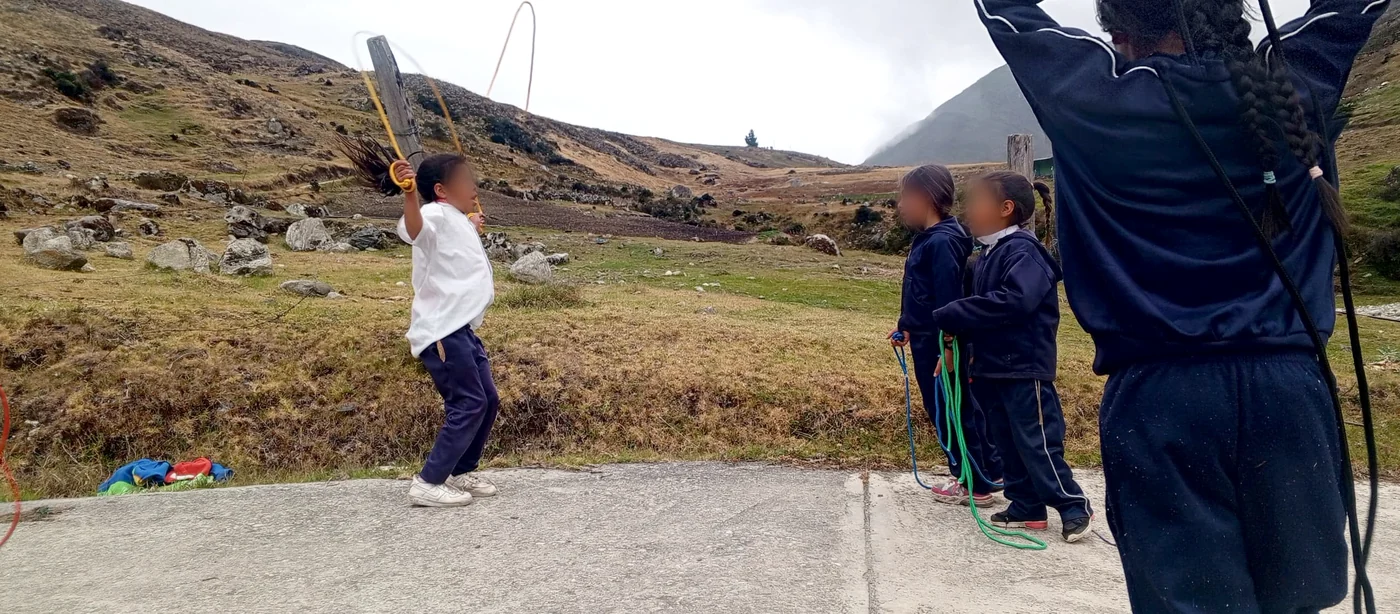
“En ocasiones nos toca realizar una parte de educación física afuera de la institución, es decir, la carretera.”
Sometimes we do PE outside the school, on the road.
Growing what they can
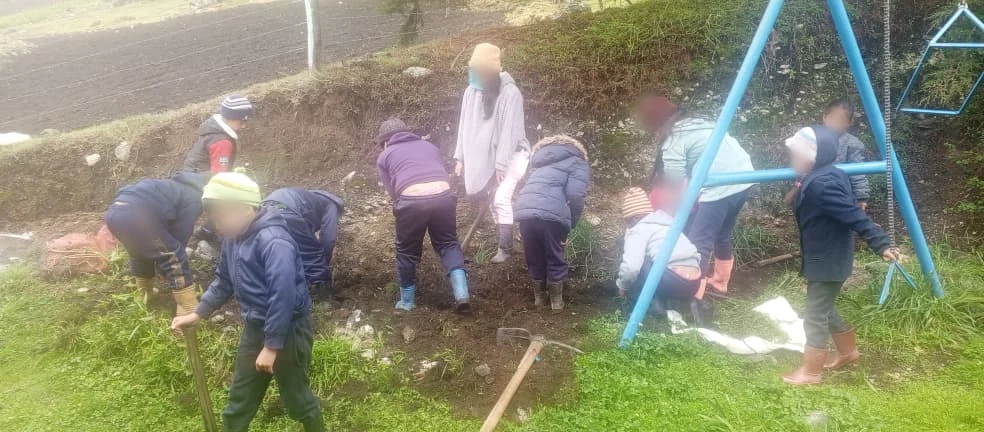
Working the school garden, by the swings.
A patch of ground near the play equipment doubles as a vegetable garden — another lesson built from whatever's already there. The children dig, plant, and tend it themselves, with the teachers beside them.
What's missing
“No contamos con proyector ni computadora ni impresora.”
No projector, no computer, no printer.
Said plainly, the way Estefany said it — not as a complaint, just as a fact the three of them teach around every day. No internet reaches the school either. There's no recreation teacher and no dedicated PE teacher; the regular teaching staff covers all of it, on top of their own subjects. Every worksheet, every map, every lesson is made or found by hand, carried up the road by whoever's bringing it.
-
01
No projector, computer, or printer
Nothing to show a video, print a page, or look something up — every lesson is taught from memory and from what's already in the room.
-
02
No internet connection
The school has no connectivity of any kind.
-
03
No recreation or PE specialist
The three educators who teach every other subject also cover physical education and recreation themselves.
Then the kitchen broke
The children stopped getting lunch.
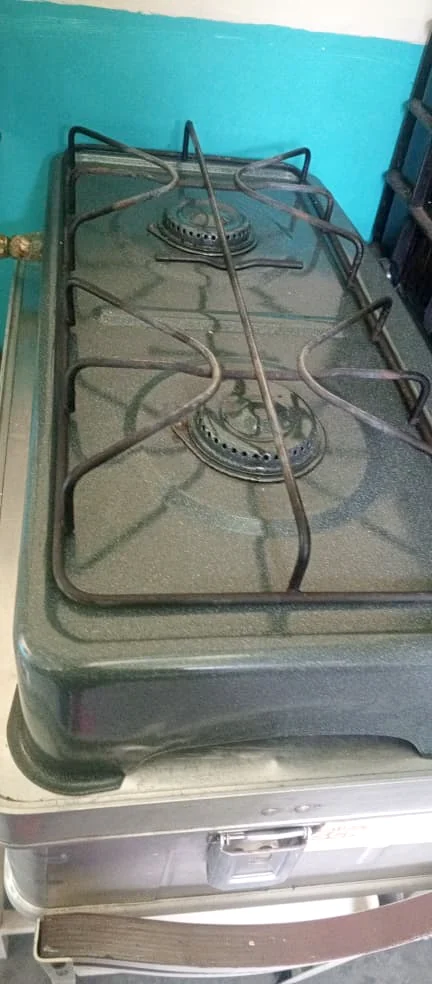
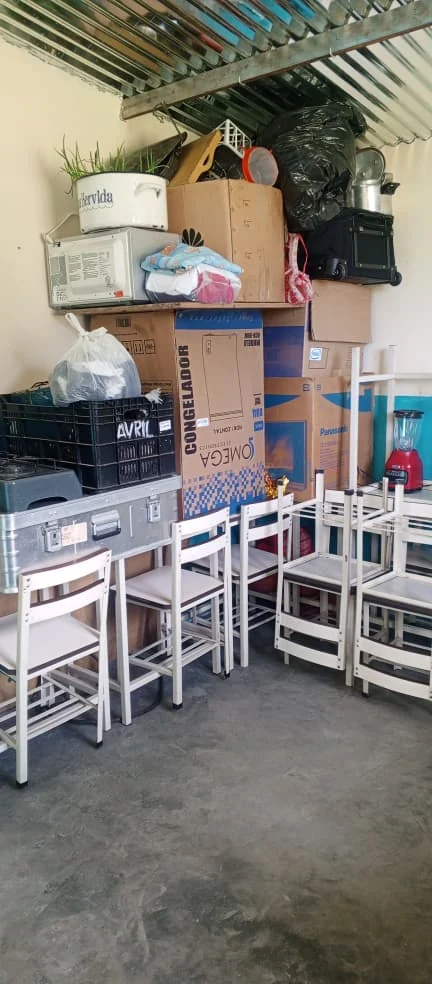
For a while, the school could cook lunch for its 22 children on this two-burner stove. Then it broke, and it couldn't anymore. That's not a small detail — for children who've already walked a long way to get to school, it's the difference between a full day of learning and an empty one.
It's why, of everything the school has asked for, fixing the kitchen is the first thing the campaign is working on. Not because it's the only need — you've just seen several others — but because it has the clearest, most immediate answer: a stove, a fridge, a sink, and the children are eating at school again.
The rest of the building
What the school has to work with, outside the classroom.
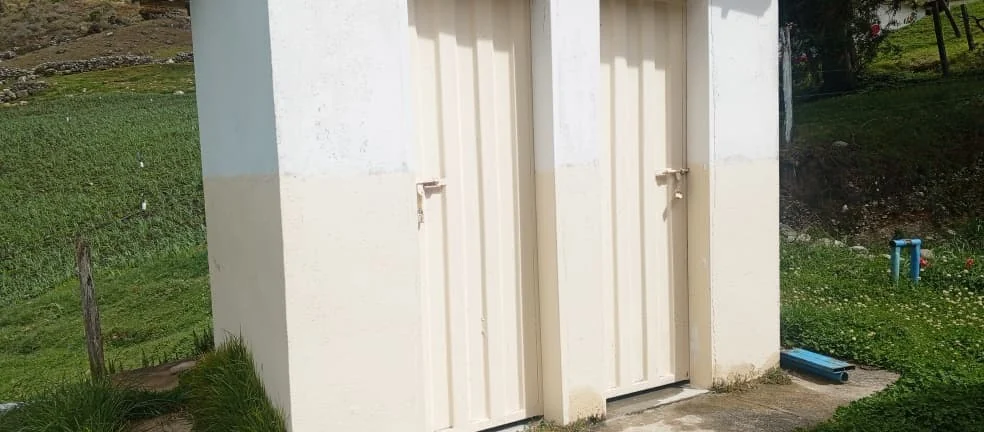
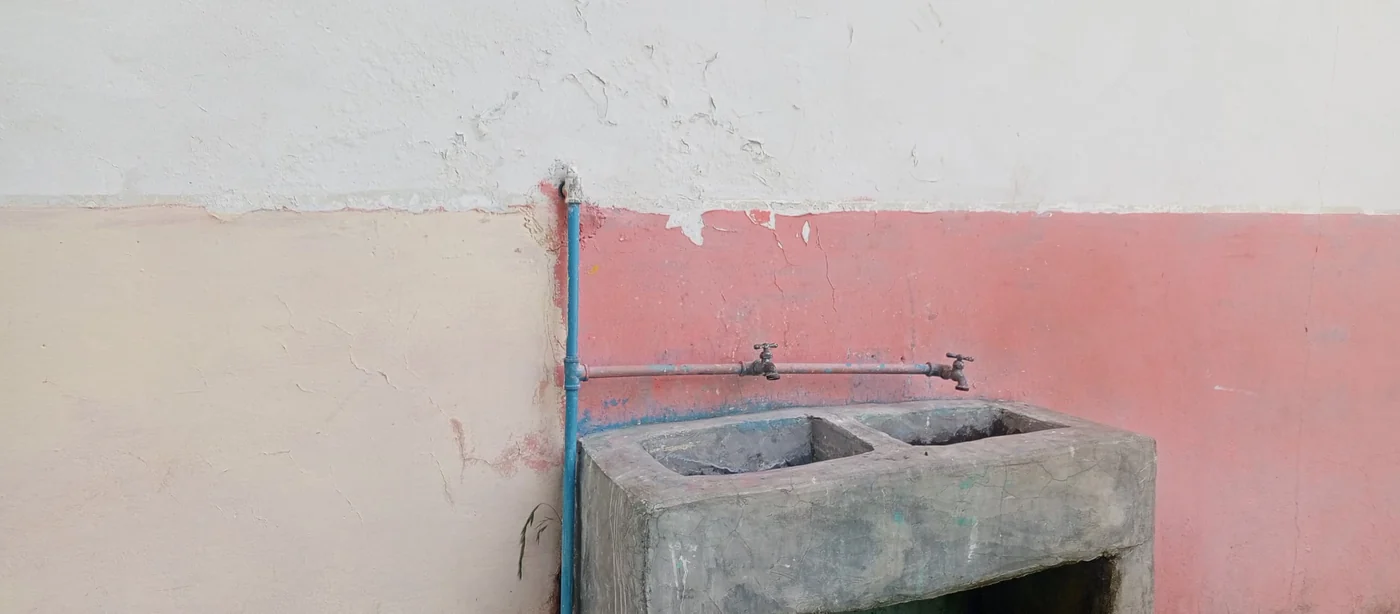
Two more plain facts about the building itself: the outdoor latrine block is the school's only toilets — and one of its two stalls is out of use, so all 22 children share the one that still works. The washbasin on the outside wall — cracked, patched, still in daily use — is where those children and three teachers wash their hands.
In her own words
“Estaba sacando polvo.”
“Sorry, I was dusting,” Estefany wrote one evening, explaining why she hadn't answered sooner. Another day: “Todavía estoy en la escuela, bajo un poco tarde” — still at school, she'll be down a little late. None of this reads as hardship in how she talks about it. It reads as care — for a building, and for 22 children, that she clearly considers hers to look after.
“Gracias por ayudar la escuelita.”
Thank you for helping the little school.
What stays with you
None of this reads like a complaint.
Ask Estefany about the school and she doesn't lead with what's missing — she describes what the children did that day. The map. The chess game. The jump ropes on the road. Three educators built a working school out of almost nothing, and what comes through in every photo and every message is not hardship. It's pride, and love for the place.
That's the part worth sitting with. Twenty-two children in Micarache have teachers who show up, every day, at the end of a road most people never drive to the end of — and who have made one room, one map, and one chess set stretch further than anyone should have to ask them to.
A hopeful turn
The first help has already started arriving.
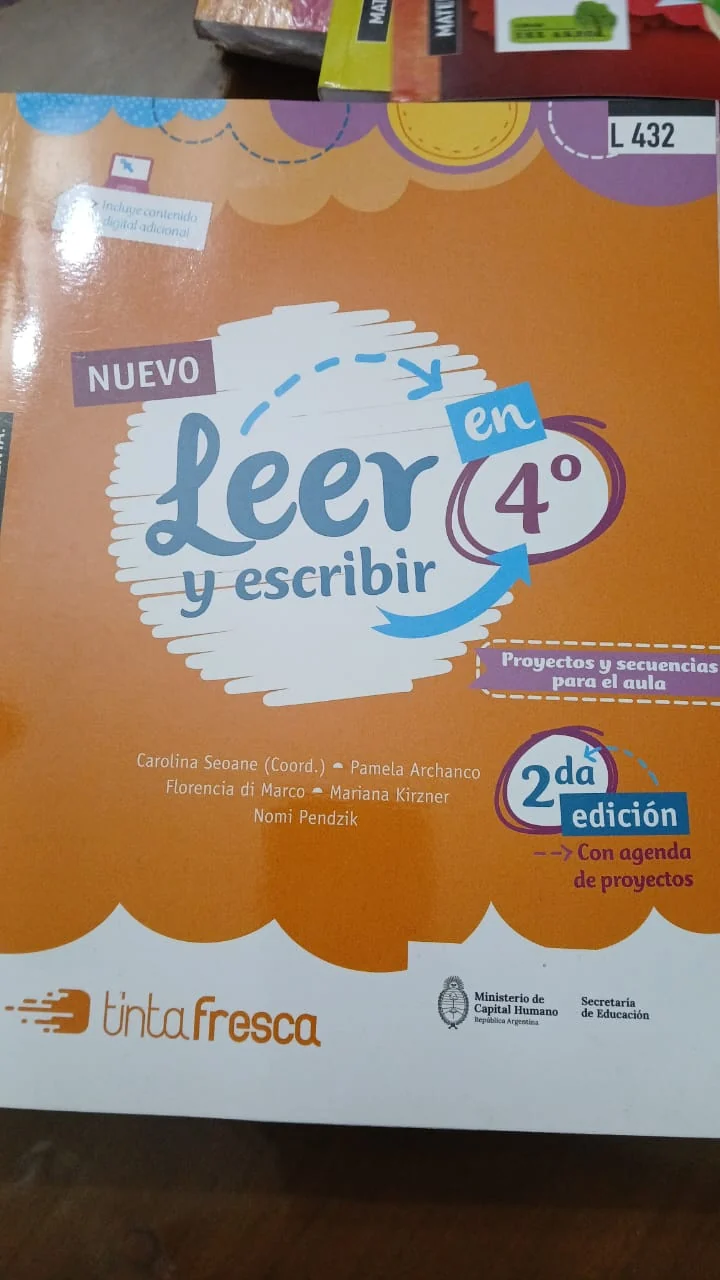
Before any of this became a campaign, a friend in Buenos Aires sent a box of reading and math workbooks north for the children of Micarache — Leer y escribir, Prácticas del lenguaje, Hacer matemática. Small, ordinary books — and among the first help to reach the school.
It's a small thing and it's exactly the point: help doesn't have to be large to matter here. It just has to arrive.
They need help
This is our part to do.
Three educators are already giving everything they have to 22 children. Giving them a working kitchen, a few more books, and the equipment a classroom needs isn't charity in the sense of rescuing something failing — it's simply the part of this that's ours to carry, so their dedication doesn't have to stretch quite so far. No blame attaches to anyone here. It's just the next thing to do.
There are two ways to help, both on the school's own page — kept separate from Terra's own ventures, so everything given goes to the school:
Send goods
Send an item from the kitchen and classroom needs list — a stove, a fridge, books, warm clothing for the children.
Give to the school fundraiser
Give directly to the fundraiser set up for the school, separate from any Terra campaign. Everything raised for the school goes to the school.