
Context · Terra Productiva
The mountain that waters the farm.
What the páramo is, why the altitude is an advantage here, and what to actually expect if you come stay at ~3,400 m / 11,150 ft.
Frailejón on the high páramo above Gavidia.
What it is
A rare high grassland, and a natural water tower.
The Andes run down the western side of Venezuela, and in Mérida they lift into the country's highest peaks. The finca sits high on that spine, in Aldea Gavidia above the town of Mucuchíes, near Sierra Nevada National Park, at about 3,400 meters — roughly 11,150 feet.
Above the finca lies the páramo itself: a rare high grassland found in only a few places on earth. Its signature plant is the frailejón, slow-growing, with silver leaves that catch moisture from the air and the clouds and release it again, slowly, into the soil and the streams below. People here call the páramo a natural water tower, and that's exactly what it is. The spring on the property — the clean water behind the growing space, and everything else here — begins its life up among the frailejones.
Why altitude helps
Not a hardship to overcome. An advantage.
Up here the days are cool, the nights are cold, and the light comes down clean and strong. That combination decides what thrives: cool days and cold nights and strong sun suit potatoes, garlic, and greens. The clean, cold water suits trout. And in the growing space going up on the property, the steady mountain climate suits mushrooms — which is where that venture begins.
Built for it
High-country farming, with the tools to do it well.
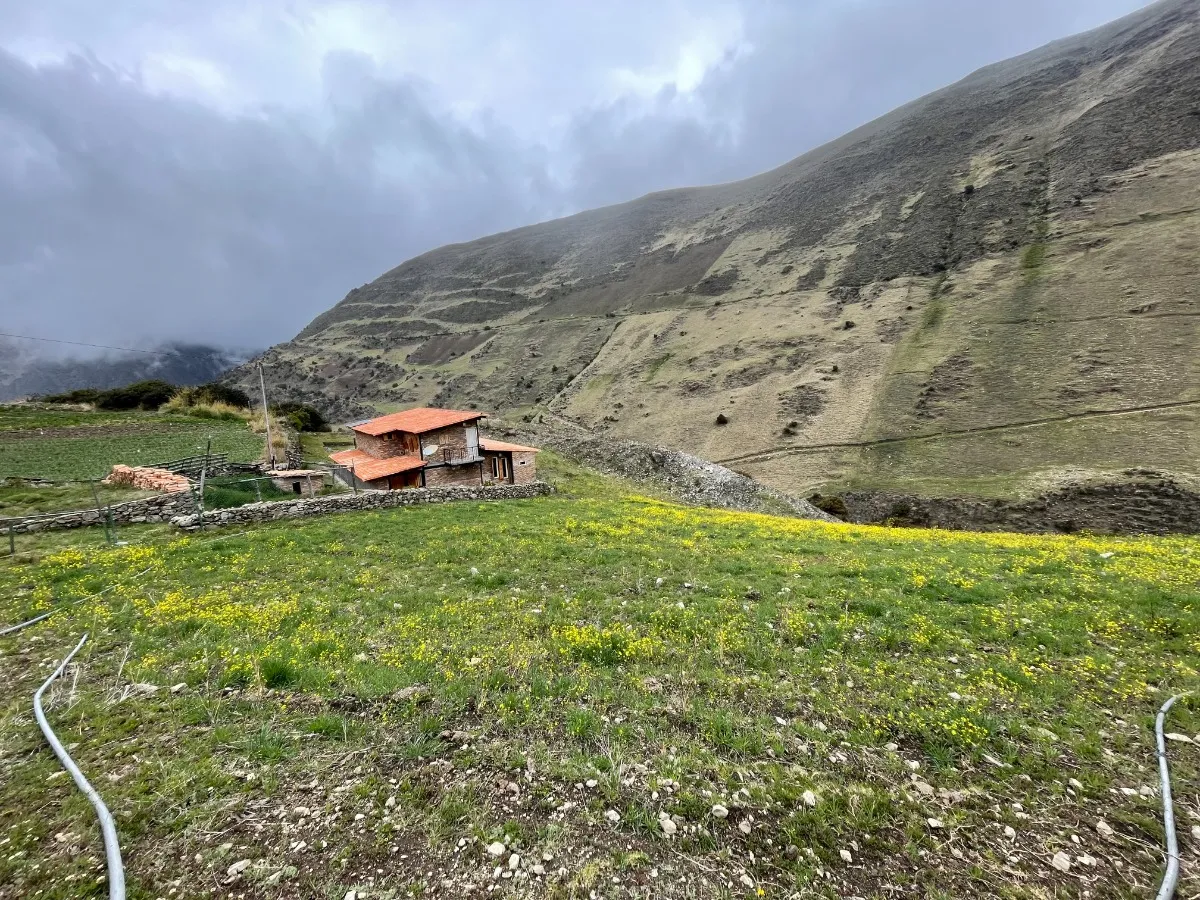
This is high-country farming as it's always been done here, only with the tools to do it properly: solar panels already installed, satellite internet already working, and a spring that doesn't depend on the public grid. The finca is roughly a hectare — about 2.3 acres — mostly cultivable, on a mountain that has watered farms for a very long time.
A mountain that has watered farms for a very long time.
If you're visiting
The climate, honestly.
The same altitude that makes this good growing country makes it a serious climate to pack for. Here's the honest version, for anyone planning a stay.
Cold days, colder nights
Strong, clean light during the day; temperatures drop fast after dark. There isn't a warm season at this altitude — just degrees of cold.
Arid-cold or damp-cold
The páramo weather is one of two things: dry and cold, or wet and cold. There's no warm option, so plan for both.
Up to a week to acclimate
At this elevation it can take several days — up to a week — to adjust. Don't be surprised if the first days feel slower than usual.
The short version: bring layers, pack for both dry-cold and wet-cold days, and give yourself time to adjust. A full guest gear guide lives on the Visit & stay page →
The thread that connects it
Everything here traces back to the water tower above it.
The spring, the crops, the trout, the mushrooms, the cold nights worth packing for — it's all downstream of the same páramo, the same frailejón, the same slow release of water into ground that's been farmed this way for a long time. That's the mountain this project builds on.